Iron Gates in Georgetown, TX

Iron gates in Georgetown, TX are built from solid bar and tubular steel, welded square and finished against rust. This guide covers iron gates work from posts and footings to hinges, pickets and repairs.
What We Cover
- How an Iron Gate Is Forged and Welded The shop steps that turn bar stock into an iron gate in Georgetown, TX: heating, bending, scrolling and welding.
- Iron Gate Posts and Footings in Williamson County Why iron gates need heavy posts and deep concrete footings in the limestone soil and clay of Williamson County, TX.
- Matching an Iron Gate to an Existing Fence How height, color and picket style get matched when a new iron gate joins an older fence line in Georgetown, TX.
- Picket Spacing and Scroll Patterns on Iron Gates How picket spacing and scrollwork change the look, strength and safety of an iron gate in Georgetown, TX.
- Solid Iron or Tubular Steel Gate Frames How solid iron bar and tubular steel compare in weight, strength and upkeep for a gate frame in Georgetown, TX.
- Stopping Rust on an Iron Gate in Humid Texas Primer, zinc and topcoat layers that keep an iron gate from rusting in humid Central Texas around Georgetown, TX.
Iron Gates in Georgetown, TX
An iron gate in Georgetown, TX is judged by two things, how it is built and how it is finished, and the second decides how long the first lasts. The crew starts from the posts and the opening, then moves to the frame, the welds and the coating. Solid bar, tubular steel and wrought iron scroll work each have a place on the same leaf.
Solid iron and tubular steel
Solid bar resists dents and carries fine detail, and tubing carries a long span at half the weight. Most gates use both: a tubing frame, solid pickets and a scroll panel in the top third. The weight of the leaf sets the size of the hinge post, and a ten foot gate in solid iron can pass three hundred pounds.
Forging, welding and finish
Bar is heated to bright orange, bent on a jig, tacked square on a flat table and welded in a staggered order. Welds are ground flush before powder coat or galvanizing goes on. Humid air near the San Gabriel River and Lake Georgetown keeps steel damp, so sealed tube ends and zinc-rich primer matter more than the color of the topcoat.
Posts, footings and the ground
Williamson County limestone soil holds a drilled footing firmly, and clay swells and shifts one. Heavy iron needs a post of four inch square tubing or larger, set at least thirty inches deep, wider at the bottom in clay. A gate that must match an older fence also needs its height, picket size and color copied from the fence line.
Guides
The pages here cover solid iron against tubular steel, how a gate is forged and welded, stopping rust in humid air, picket spacing and scrolls, posts and footings, and matching a new gate to an old fence. Longer articles go further into the same work.
Latest Guides

Choosing Between a Single and Dual Swing Iron Gate
An iron gate with one leaf is simple, and an iron gate with two leaves is more forgiving, and the right choice in Georgetown, TX depends on the width of the opening, the weight of the iron and the room behind it. Most mistakes come from picking the look first and finding the swing arc afterward. The measurements below settle the choice before any steel is cut.
What opening width splits the choice?
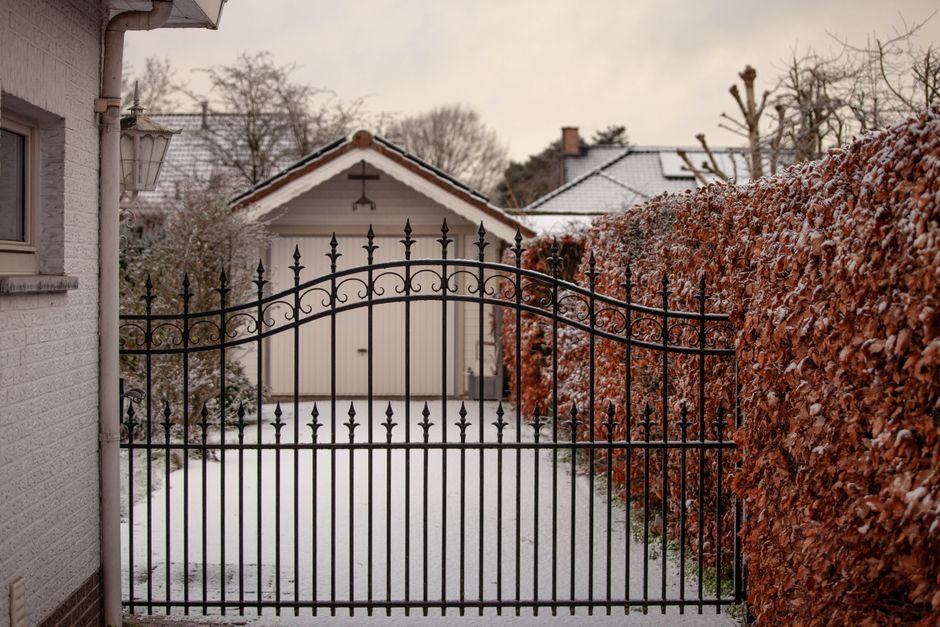
A single swing leaf works well up to about ten feet, and beyond that a dual swing pair is the safer choice. A twelve foot leaf in solid iron can weigh over three hundred pounds and puts a long lever on one post. Two six foot leaves share the load between two posts, and each leaf is easier to move, to hang and to keep square over the years.
Width also decides how much the hinge post is asked to do. The pull on a hinge post grows with the length of the leaf, so doubling the width more than doubles the strain. That is why a wide single leaf needs a post and a footing much larger than the same gate split into two halves would use.
How do the two types compare?
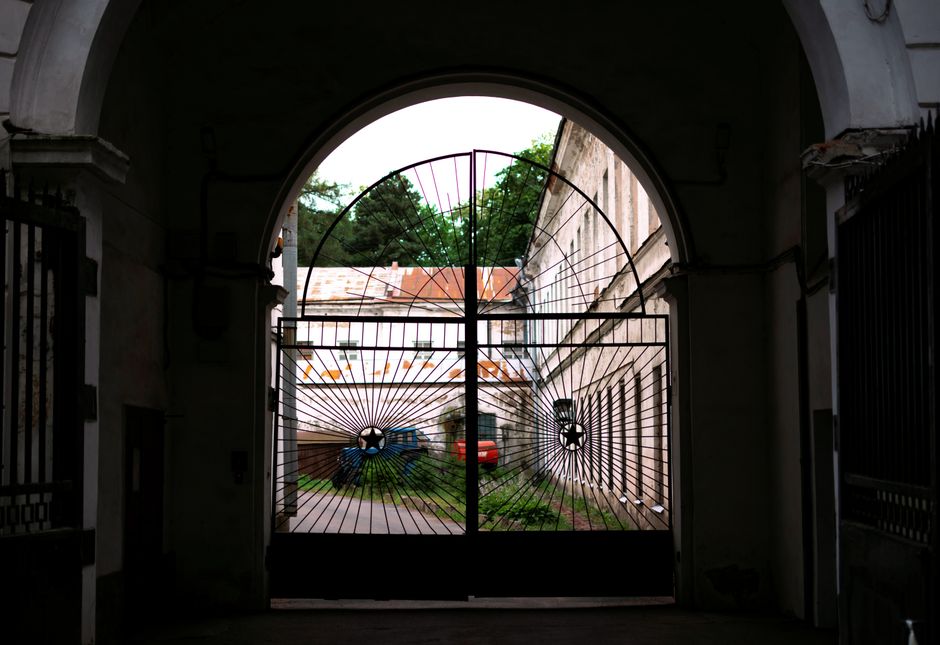
The table sets the two layouts side by side on the points that decide most jobs in Williamson County.
| Point | Single swing | Dual swing |
|---|---|---|
| Best opening width | Up to about ten feet | Ten feet and wider |
| Arc needed | Full leaf width on one side | Half the opening on each side |
| Hinge post load | One post carries all of it | Shared between two posts |
| Sag risk | Higher on a wide leaf | Lower, each leaf is shorter |
| Operators | One motor and one set of sensors | Two motors, timed to open in order |
| Parts to maintain | Fewer hinges and latches | More hinges, a drop rod and a center stop |
How much room does each one need?
A single leaf needs a clear arc equal to its full width, and a dual pair needs half the opening on each side. The arc must be clear of cars, steps, shrubs and the street. On a short drive off a busy road, a leaf that swings outward is a hazard, so the gate swings in, and the grade inside the property has to allow it.
A tape and a string line settle the question in a few minutes. The string is run from the hinge post along the path of the bottom rail, and any object under it is a problem. Planters, a mailbox, a sprinkler head and a parked car all show up this way before they cost a repair.
What does the ground change?
A rising drive lifts the ground into the path of the bottom rail, and each leaf of a dual pair sweeps a smaller arc, so it clears a slope more easily. A rising hinge also lifts a leaf as it opens, and that trick works on either layout. Clay near the San Gabriel River moves posts over time, and two smaller leaves are easier to bring back into line than one heavy one.
On rock, the question is different. Limestone soil holds a post firmly, so a single wide leaf can hang for years without drift, and the extra cost of a second leaf buys little. The measuring visit looks at the soil on both sides of the opening, because the two posts often sit in different ground.
Where does the second leaf help in daily use?
Many households open only one leaf day to day, and the second stays pinned with a drop rod for deliveries or events. That cuts wear on the hinges and keeps the leaf in use light. A drop rod sleeve in the drive needs a drain hole and a cap, or limestone dust and leaves will plug it within a season.
The reverse also happens. A household that wants the full opening every time, for a trailer or a work truck, finds the center gap and the drop rod a nuisance. Those drives are better served by a single wide leaf on heavy posts, or by a slide gate if there is room along the fence.
How does an operator change the choice?
An operator is mounted on each leaf of a dual pair, and the two motors are timed so the leaf with the overlap opens first and closes last. A single swing needs one operator and one set of safety sensors, which is simpler to maintain. Posts for any operator are set deeper than for a hand gate and are left to cure for a full week before the motor goes on.
The operator also sets the stops. A swing gate on a motor needs a firm stop in the open and closed positions, and the stop is a steel post or a block in the ground, not the fence. A leaf that is pushed against a soft stop will creep out of line within a month.
Which layout suits a lot near Sun City Texas?
A tight lot with a short setback often fits a dual swing pair because each leaf stays inside the property line. A wide frontage with open ground beside the gate can take a single leaf with a longer arc, or a slide gate. Streets near Interstate 35 and the older blocks around Georgetown Square tend to have short setbacks, so the dual pair is common there.
How is the choice made on site?
A string line, a level and a tape settle it. The width, the rise across the arc and the free space behind the posts are written down, and the leaf count follows from them. Style and finish come afterward and rarely change the answer.
Does a dual gate cost more to keep up?
A dual gate has more moving parts, so it has more to check. Four hinges instead of two, a center latch and a drop rod each need grease and an occasional adjustment. The work is light, and the gain is that each leaf is lighter and each hinge carries less, so wear is spread across more parts.
How do hinges and latches differ between the two?
A single leaf hangs on two hinges, or three on a tall gate, and latches into a keeper on the opposite post. A dual pair hangs on four hinges and meets in the middle, where one leaf holds a latch and the other holds a stop plate. The leaf that closes first carries the stop, and the leaf that closes last carries the latch, so the order of closing is built into the hardware.
Hinge choice follows the weight. Heavy iron takes adjustable weld-on hinges with a greased bearing, because the bolt-on type loosens over time and lets the leaf drop. A hinge with a set screw can be turned a few degrees to lift a sagging corner, and that small adjustment saves a repair visit.
What about wind and open ground?
A solid or tightly spaced leaf catches wind like a sail. On an open lot in Texas Hill Country, a wide single leaf can slam hard on a windy afternoon and loosen the latch. Two shorter leaves catch less air each and are held by a center stop. A picket gate with open spacing lets wind through and puts less load on the post.
How does the drive surface matter?
A leaf swings over the drive, so the surface under it matters. A drive with a crown, a curb or a drainage cut in the path of the bottom rail needs a higher rail or a hinge that lifts. Concrete cracks near a footing in clay, and a gravel drive needs a hard strip where the drop rod drops. These details are checked at the same time as the width.
What is the short answer?
Use a single leaf under ten feet with a clear arc, and two leaves for anything wider or tighter. Check the grade before the style.

Repairing a Damaged Iron Gate Section by Section
Most damage to an iron gate is local, and most repairs are local too: a bent picket, a cracked weld or a rusted rail can be fixed without replacing the whole leaf. The question in Georgetown, TX is how far the damage reaches. A quick check along the frame with a flashlight and a hammer answers it in a few minutes, and the answer decides whether the job is an afternoon or a trip to the shop.
How is the damage found?

Damage is found by looking, tapping and pushing. The crew walks the gate with a flashlight held low, which shows cracks and bright rust that the flat midday light hides. A light tap with a hammer along each rail gives a ring where the metal is sound and a dull thud where rust has eaten the wall. A push on each picket shows any that has come loose at the weld.
The posts are checked at the same time. A leaf that drags or a latch that misses is often a post problem, and welding a repaired leaf onto a leaning post only hides the cause for a season.
How is a bent picket fixed?
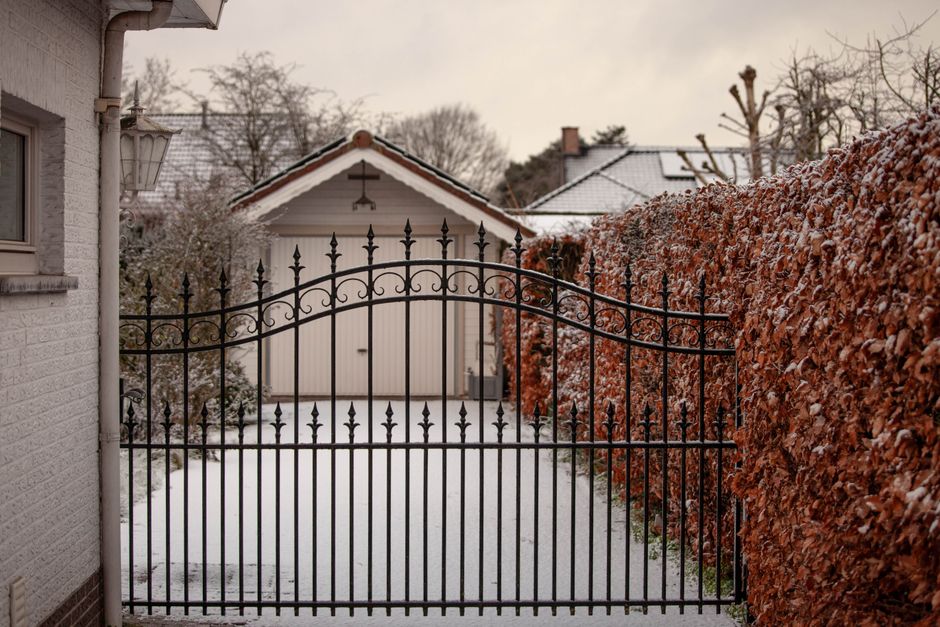
A bent picket is straightened cold if the bend is slight and heated if it is sharp. A slight bend is pushed back with a bar and a block. A sharp bend is warmed with a torch to dull red, bent back and left to cool in the open. A picket with a crease or a crack is cut out and a new piece is welded in, ground flush and primed.
What about a cracked weld?
A cracked weld is ground out to clean metal and re-welded, never welded over. A bead laid over a crack closes the surface and leaves the crack alive underneath, and it opens again with the next hard swing. The crack is chased with a grinder until the bright steel shows at the bottom, then filled in passes and ground smooth.
Cracks tend to show at the hinge corner and at the latch corner, where the leaf takes the most stress. A crack at the hinge side points to a loose hinge or a leaning post, and the cause is fixed before the weld is redone.
When is a rusted rail replaced?
A rusted rail is replaced when the rust has gone through the wall of the tubing or lost more than a third of its thickness. Surface rust is sanded to bright metal, primed and painted. Pitted rust with scale that flakes off in layers is cut out. The new section is the same size and wall as the old one, welded in, ground and finished to match.
How is the finish matched after a repair?
The finish on a repaired section is rebuilt in layers: zinc-rich primer, a second primer coat and a topcoat matched to the old color. A repair done in a powder coated gate cannot be re-baked on site, so the topcoat is a brushed or sprayed paint made to look like the powder coat. A full recoat in the shop gives the best match and costs a longer wait without the gate.
What do hinges and latches need during a repair?
Hinges and latches are checked on every repair, because they wear first and they hide behind other damage. A hinge pin that has worn oval lets the leaf drop a quarter inch, and that drop looks like a bent frame. The pin and bushing are replaced, the hinge is greased and the leaf is lifted back to level before any welding starts.
The latch gets the same attention. A keeper that has been bent by years of slamming is straightened or replaced, and the latch bolt is filed clean. A gate that closes without a catch is a nuisance, and a gate that catches only when pushed is a sign that the leaf has dropped or the post has moved.
How is a sagging leaf corrected?
A sagging leaf is corrected by finding the cause and then lifting it. A loose hinge is tightened, a worn bearing is replaced, a bent diagonal is straightened and a leaning post is reset. When the frame has lost its square, an adjustable tension rod or a diagonal brace is welded in, and the leaf is pulled back until the diagonals match within an eighth of an inch.
The check for square is simple. Two tape measurements from corner to corner across the leaf give the answer, and the two numbers should agree. A leaf that is out by more than a quarter inch is pulled before any finish goes on, since paint over a leaf that is still moving will crack at the joints within a season.
What does humid air do to a repair?
Humid air slows drying and speeds flash rust, so a repair near Lake Georgetown or the San Gabriel River is timed around the weather. Bare steel that is ground in the morning will show orange by the afternoon if it is left open. The ground area is primed within the hour, and the topcoat goes on only when the primer is fully cured and the air is dry.
Frequently asked questions
Can a gate be repaired while it is still hung?
A gate can be repaired in place for small jobs such as touch-up, hinge adjustment and a single picket. Welding on or near the hinge is done with the leaf lifted off its pins so heat does not damage the bearing. Larger repairs go to the shop.
How long does a repair take?
A picket or a weld takes an afternoon. A rail replacement takes a day on site or several days in the shop with finishing. Paint and primer need dry time between coats, and humid weather near Lake Georgetown stretches it.
Is an old iron gate worth repairing?
An old iron gate with a sound frame is worth repairing, because old bar is often thicker than new stock. A frame that is bent out of square, with several cracked joints and heavy rust, is usually replaced. A quick look along the diagonals and the hinge corner gives the answer.
Does repair change the look of the gate?
A good repair is invisible from the street. The new piece is the same size, the weld is ground smooth and the color is matched outdoors. A patch that stands out was usually finished indoors under shop lights and not checked in daylight.
What causes the same crack to come back?
A crack that returns usually points to an unsolved movement: a loose hinge, a leaning post or a leaf that hits its stop. Welding fixes the metal but not the movement. The cause is found first, then the weld is redone.
Can a repaired gate carry an operator?
A repaired gate can carry an operator if it swings freely by hand and sits on plumb posts. The motor will turn any drag into a larger problem. A leaf that takes more than a light push to move is repaired first, then the operator goes on.
What does a good repair visit end with?
A good repair visit ends with the gate swung through its full arc, the latch caught three times and the clearance at the free end measured. Anything that still binds is fixed before the crew leaves.
What is the short answer?
Repair the section that failed, find the movement behind it and rebuild the finish in layers. A local repair done that way outlasts a patch.
Nearby Service Areas
We also cover driveway gates pros in Austin.